

BIOGRAPHY
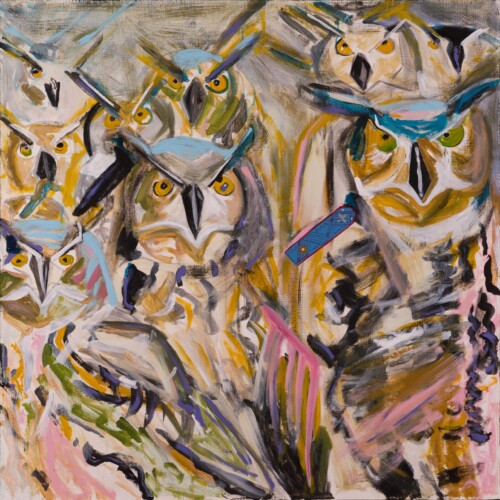
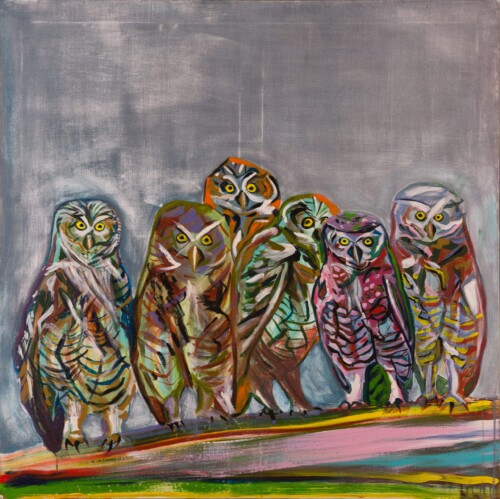
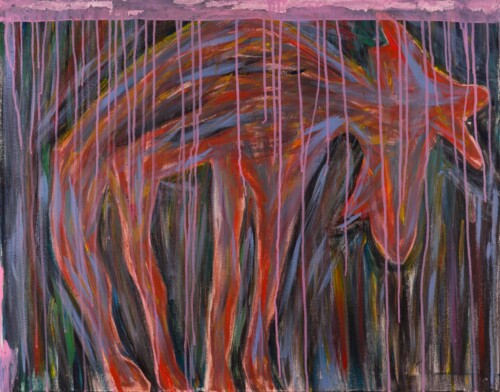
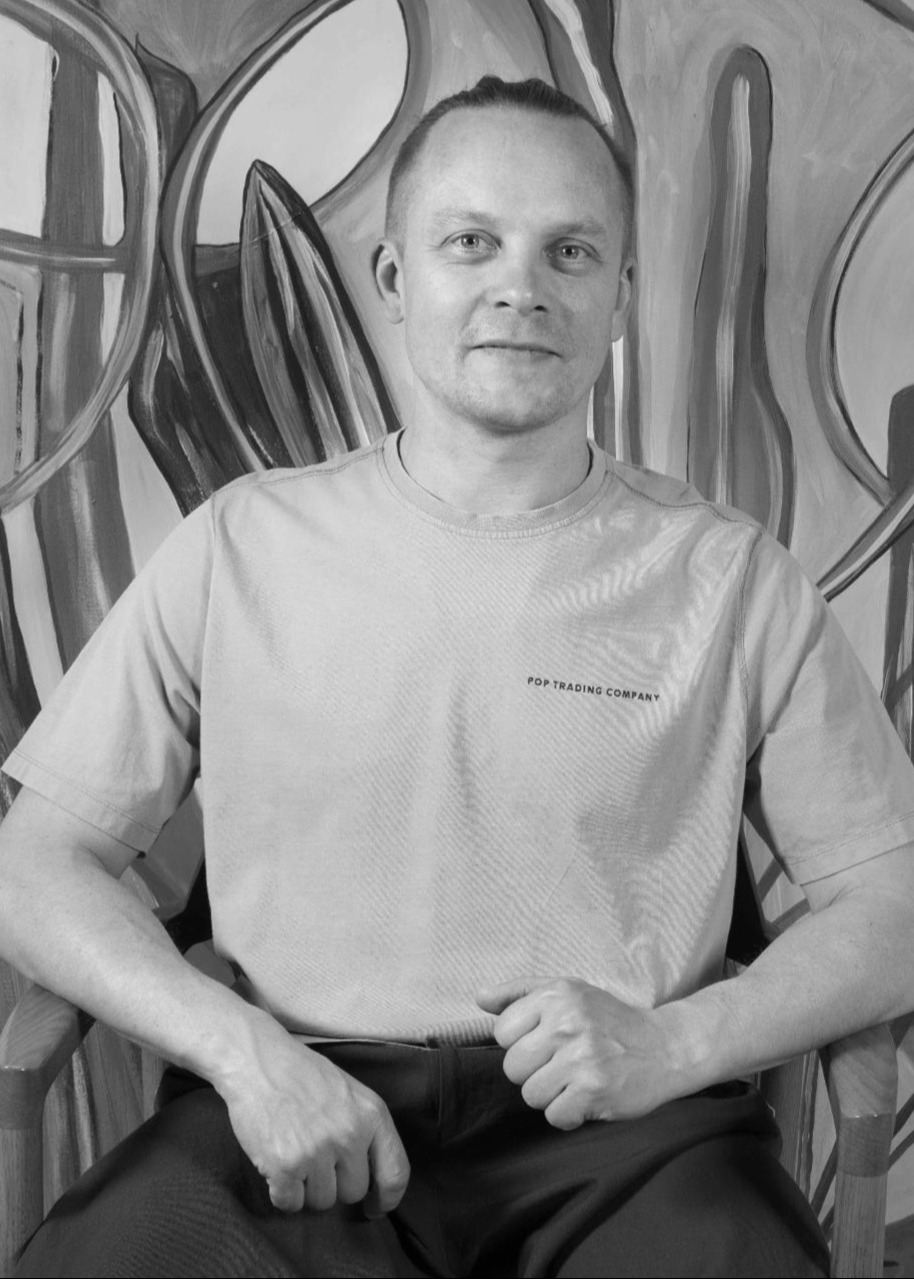
Andrey Kartashev (b. 1981) is a contemporary Russian artist working in the genres of animalistic and religious painting. His work draws on ancient myths and legends, resulting in richly colored compositions with dynamic lines in the vein of naïve art. His major projects include Sadko (2025) and Owl (2026).
For several years, he took private lessons with artist Yuri Meleksetyan (Yura Meks), after which he continued his education independently. He has participated in group exhibitions in Moscow, including Fashionable Underwater Odyssey of Team Sadko, Zdes na Taganke Gallery (2026), and Museum of Ecological Art (2022). In 2022, he was selected for the Contemporary Art Biennale at the Tretyakov Gallery. In 2026, he took part in the art fair festival Traditions and Modernity at Gostiny Dvor in Moscow.
CV
Group exhibitions
2026 – Event Horizon, Moscow
2026 – Fashionable Underwater Odyssey of Team Sadko, Zdes na Taganke Gallery, Moscow
2026 – festival Traditions and Modernity, Gostiny Dvor, Moscow
2022 – Museum of Ecological Art, Moscow
2022 – I Contemporary Art Biennale, Tretyakov Gallery, Moscow Art Fairs
STATEMENT
My painting unfolds on a plane that I perceive not as a limitation, but as a stage. I am interested not in realism, but in the image as a symbol—a theatrical figure existing between the external and internal worlds. In this approach, references to ancient rock art and Egyptian art are important to me: clarity of form, sign-like imagery, frontality, and convention. However, these historical references are not a stylistic imitation, but a way of speaking about contemporary and personal experience.
I am the founder and creative force behind the set design company “Opora Krasnogo,” which creates visual worlds for cinema—from historical reconstructions to fantasy. This experience directly informs my artistic thinking. I perceive the image as a stage space, where figures, objects, color, and line function as elements of scenography: they establish narrative, roles, atmosphere, and internal dramaturgy. For me, composition is therefore not only the arrangement of forms, but the construction of an integral world.
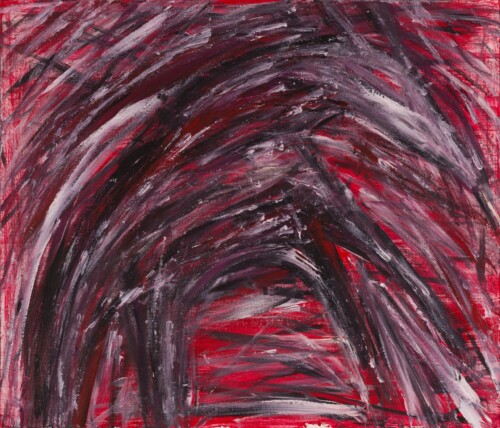
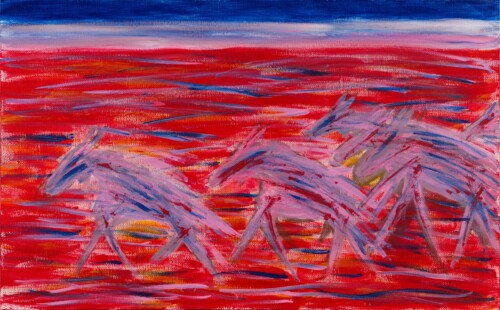
I primarily work with acrylics. My style is characterized by sketch-like execution, saturated color, dynamic line, and an open conventionality of form. The images in my work often balance between the comic and the serious, the naïve and the symbolic, the decorative and the psychological.
One of the key motifs in my practice is birds. Through them, I speak about the human condition: vulnerability, freedom, character, solitude, observation. The image of the owl becomes a metaphor for the human being in all its range—from the humorous to the tragic, from the everyday to the sacred. The project “Owl” invites the viewer to slow down and turn inward, to a moment of recognizing oneself in the other.
In my series of religious subjects, I turn to canonical scenes, drawing on the Byzantine tradition, but reinterpret it through naïve plasticity, a vivid color palette, and a personal tone. What matters to me is not the illustration of a religious narrative, but its translation into the space of a living image—simple, direct, and emotional.
In addition to painting, I work with mixed media and collaborations. Joint projects with Yulia Che and Yura Meks have resulted in three- dimensional objects in which drawing extends beyond the plane and becomes part of volumetric form. This continues my exploration of the image as a stage, while transferring it into physical space.
Alongside this, I practice beekeeping. My apiary in the Tver region has become a space for observing natural cycles, time, and change. This experience deepens my perception of the world as living, ritualistic, and symbolic. It brings together labor, attention, repetition, and waiting—the same processes that are essential to my painting.